






FootJoy's internal lab testing, documented through a hands-on fitting session at the brand's Manchester Lane facility, has produced data points that footwear brands and golf retailers may want to factor into how they position performance footwear on the floor. A golf media evaluation of the Premier Series line found that correcting shoe size alone — dropping a half size into a properly measured fit — corresponded with a 2 mph increase in swing speed on a launch monitor, a delta that translates to approximately three yards of carry distance.
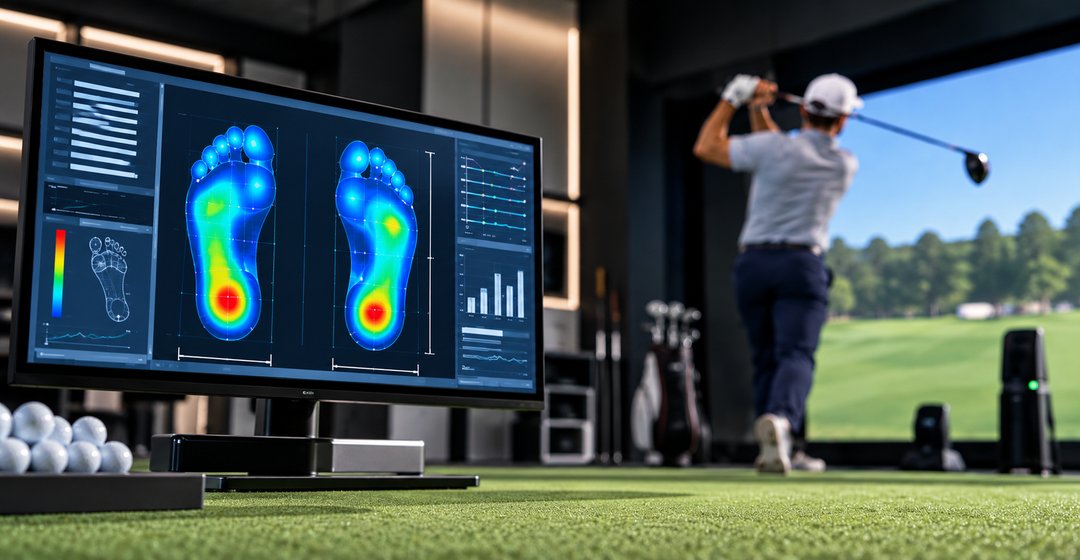
The fitting process highlighted a gap between how most golfers purchase footwear and what performance footwear is actually engineered to deliver. Foot mapping during the session revealed asymmetric dimensions that standard shelf sizing does not account for — in this case, a two-millimeter length differential between feet and a five-millimeter width differential. FootJoy's position is that shoe architecture, particularly instep height and lateral width, directly affects foot stability during the downswing. Trail foot movement of six to seven millimeters during the swing, the brand's team noted, forces subconscious compensation and disrupts hip rotation. That compensation is a performance variable that proper traction and torsional stiffness are designed to eliminate.
Three models from the FootJoy lineup were evaluated against both comfort metrics and launch monitor output: the Premier Series Packard, the spikeless ProSL, and a hybrid model positioned between the two. The Premier Series performed best for stability and ground contact under load. The ProSL delivered comparable launch monitor numbers despite a lighter, more cushioned construction. The hybrid offered a middle-ground profile suited to practice and walking rounds. Each model targets a distinct consumer use case, which has direct implications for how retail staff and brand reps should be guiding purchasing conversations.
For golf retailers and footwear brand managers, the business takeaway is straightforward: if footwear is being merchandised primarily on aesthetics or comfort, performance positioning is being left on the table. Structured fitting protocols — already standard in the club-fitting segment — represent an underutilized upsell mechanism in the footwear category. The data from FootJoy's lab suggests there is a measurable performance argument to be made at the point of sale, one that aligns footwear more closely with how consumers already think about club technology.