


For most of golf's history, keeping a course running required a particular kind of mechanical fluency.
It required an understanding of engines, hydraulics, belts, blades, bearings and the peculiar temperament of machines that spend their lives cutting grass before most golfers have finished that first up of morning coffee.
Increasingly, you may also need to understand GPS, lithium-ion batteries, wireless connectivity, digital diagnostics and robots.
That shift became unusually explicit this week when Husqvarna and Golf Ireland announced a new Robotics and Battery Apprenticeship Programme designed to train technicians for the increasingly computerized machinery maintaining modern golf courses.
It would be easy to see this as another chapter in golf's robotic-mower boom. It's actually a more interesting story about the humans standing beside them.
Golf's maintenance equipment is becoming technology. And that means the golf course mechanic is becoming something closer to a robotics engineer.
When the Lawn Mower Becomes a Computer
Walk into a traditional golf course maintenance building and you'll find a world that still looks reassuringly mechanical: workbenches, tools, tires, cutting reels and equipment parked in various states of repair.
Now add software.
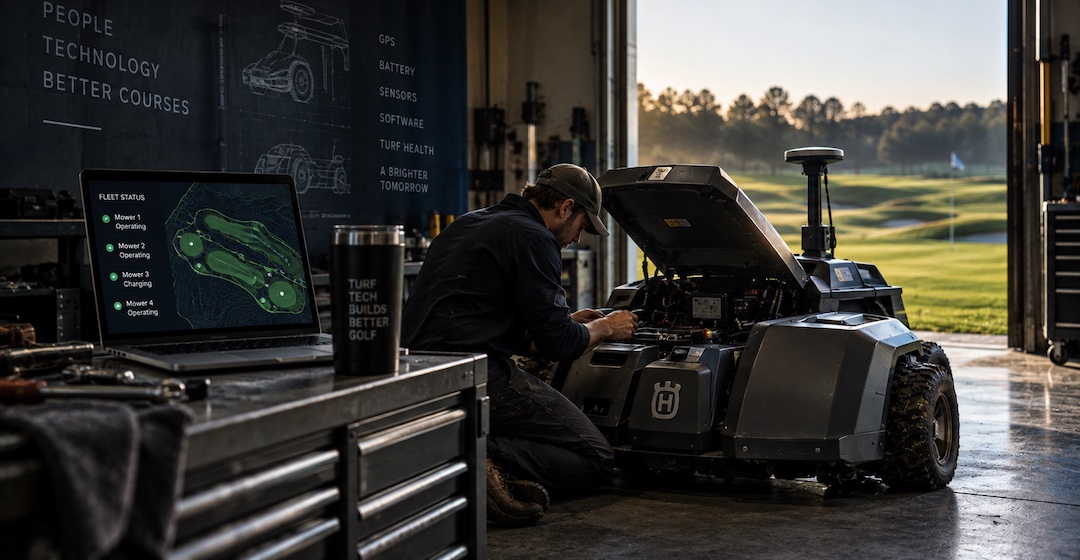
Husqvarna's commercial robotic mowers can navigate using satellite positioning and virtual boundaries rather than physical guide wires. They can be monitored and controlled remotely through fleet-management software. Cutting heights can be adjusted through an app.
Some systems incorporate cameras and AI-powered object recognition. Battery-powered autonomous machines are even beginning to collect range balls—and that creates an entirely different maintenance problem.
When an old mower stopped working, a technician might trace the problem through an engine, hydraulic system or mechanical linkage. When an autonomous mower stops working, the culprit could still be mechanical. But it could also be a battery-management system, connectivity problem, positioning error, sensor failure or software issue.
The toolbox hasn't disappeared. It has acquired a laptop.
That's what makes the new Golf Ireland program notable. The curriculum isn't merely teaching technicians how to service a new mower. It specifically includes robotics, battery technology, GPS-guided systems, connectivity and digital diagnostics.
Those sound less like the qualifications of yesterday's grounds-equipment mechanic and more like the résumé of someone working in industrial automation.
The Robots Aren't Exactly Taking the Jobs
The obvious narrative surrounding automation is that machines replace humans, while golf is producing a more complicated picture.
At Scotland's Gullane Golf Club, four autonomous fairway mowers introduced earlier this year are reportedly recovering roughly 30 to 40 hours of labor every week during the growing season. But course manager Paul Armour says the technology hasn't eliminated the need for his staff. Instead, employees can spend less time driving mowers back and forth and more time doing detailed work around the course.
That's an important distinction.
A robot is exceptionally good at repeatedly following a programmed mowing pattern. It is considerably less useful when a bunker needs rebuilding, drainage fails, a tournament requires unusual preparation or one of the robots itself decides it no longer wants to cooperate.
Automation doesn't necessarily remove the human. It can move the human further up the technical ladder.
We're already watching the same transformation happen elsewhere. Auto mechanics increasingly diagnose rolling computers packed with sensors and software. Farmers manage GPS-guided equipment and precision-agriculture systems. Factory technicians maintain robots that perform work humans once did manually.
Golf course maintenance is entering that same physical-digital collision.
And the scale is becoming difficult to dismiss. Husqvarna says its robotic mowing equipment is already used at more than 1,700 golf courses worldwide. Autonomous equipment has appeared at elite tournament venues, while competing systems are accumulating tens of thousands of acres of real-world mowing.
At some point, maintaining the robots becomes its own job.
A Different Kind of Greenkeeper
There's an irony here as golf course maintenance remains one of the game's oldest crafts.
The best superintendents and greenkeepers possess an almost obsessive understanding of soil, grass, weather, water and how thousands of tiny decisions affect the way a golf ball interacts with the ground.
None of that becomes obsolete because a mower can drive itself—if anything, automation may allow more time for it.
What changes is the layer underneath. A maintenance team that once managed people operating machines increasingly manages fleets of machines operating themselves. Someone has to configure them, monitor them, diagnose them and understand when the data says something has gone wrong.
That creates opportunity, but also a skills problem. Golf courses can't simply buy increasingly sophisticated equipment and assume the existing labor market will automatically know how to maintain it.
Husqvarna and Golf Ireland are essentially acknowledging that the workforce has to evolve alongside the hardware.
And that may ultimately be the more consequential side of golf's robotics revolution.
The first wave was easy to photograph: little autonomous machines crawling quietly across pristine fairways while golfers slept, but the second wave is less visible.
It's the technician standing inside the maintenance building the next morning, looking at a machine that has an electric drivetrain, satellite navigation, wireless connectivity, onboard sensors and software—and figuring out why it isn't doing what it's supposed to do.
He'll probably still need the wrench, but he'd better know what the error code means as well.
The Golf Course Mechanic Is Becoming a Robotics Engineer
Autonomous machines are changing more than golf course maintenance. They're turning mechanics into a new generation of high-tech robotics technicians fast.

· 23 hours ago
Related Articles
Business
+2
Courses
Technology
The Golf Course Mechanic Is Becoming a Robotics Engineer

Business

LIV Golf Cancels Season Finale, Concerts Amid Operational Breakdown
Business
+1
Technology

Golf's Next Employee Might Just Be an AI Agent

Courses
+2
Tournaments
Podcast

Duff Foreman Could Make History as First Known AI Broadcast Personality to Join a Live Professional Golf Broadcast
Clubs
+2
Equipment
Technology

Golf's "Weirdest" Putters Are Winning the Engineering War

Business
+3
Products
Technology
Tournaments

ParTab Partners with iGolf to Bring Course Intelligence to the Games Golfers Actually Play
Business
+1
Technology

Golf AI Is Learning What Your Scorecard Can’t Tell You

Business
+1
Tournaments

iGolf Partners with Skins Golf to Power Its All-in-One Competitive Golf Platform
Business
+1
Tournaments

LIV Golf Cuts Prize Money Following Cancellation of Team Championship

Courses
+1
Tournaments

Carden Park Secures Women's PGA Cup Hosting Rights

Business
+2
Courses
Tournaments
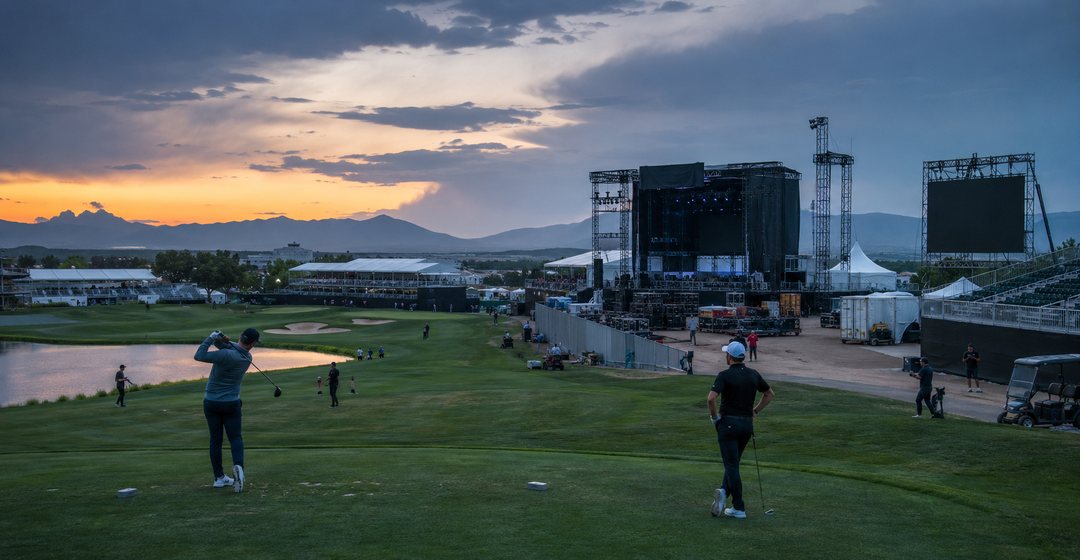
LIV Golf's Season Finale Plans Scaled Back Amid Uncertainty
Equipment

TaylorMade Adds Hi-Toe 5 Wedge to Growing Wedge Portfolio
Business
+2
Products
Technology
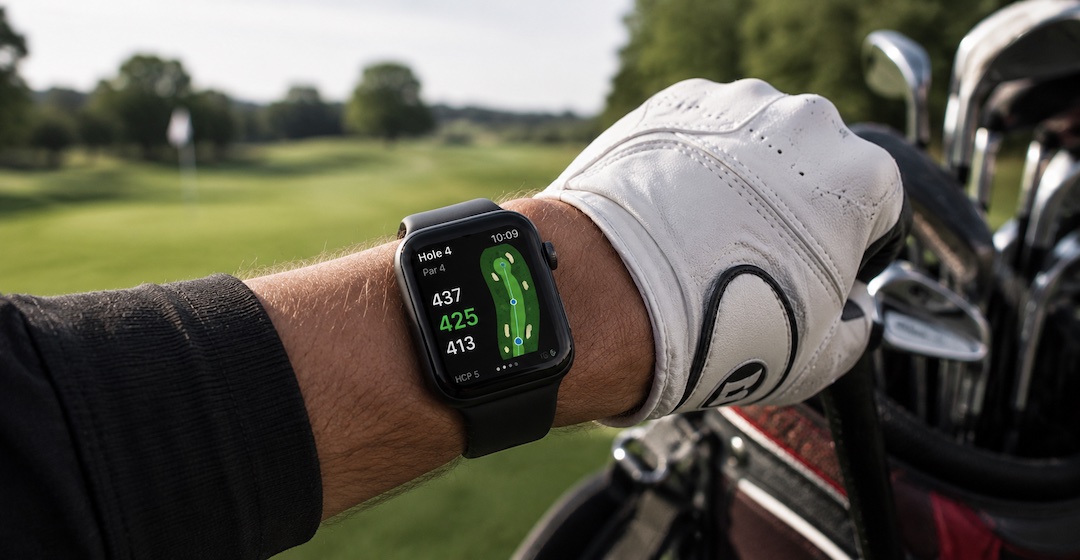
Your Apple Watch Is Coming for Your Golf Watch
Business
+1
Tournaments

LIV Golf's Bedminster Event Draws Trump, Surfaces Mystery Investor

Equipment
+1
Products
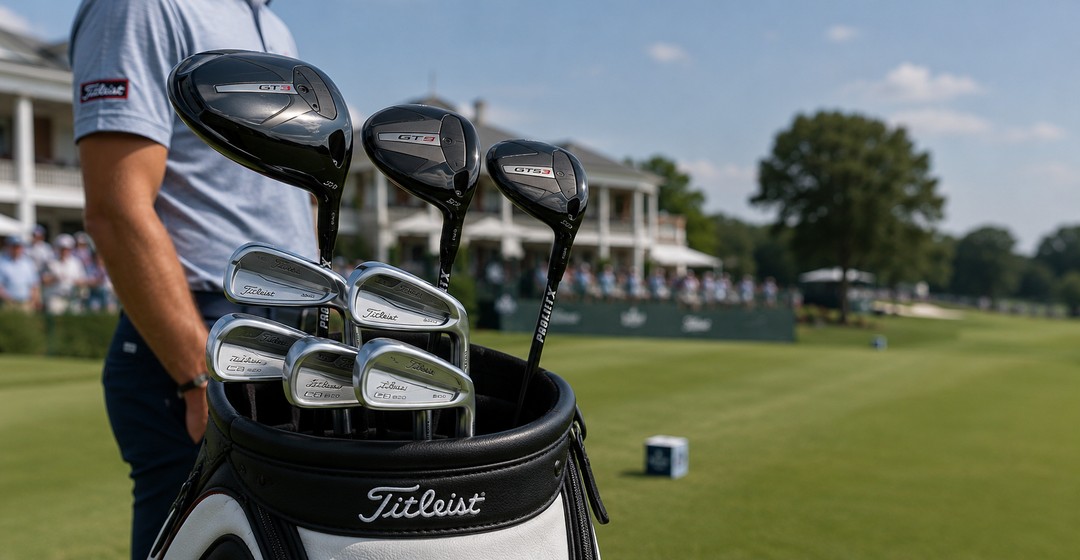
Titleist Equipment Wins 2026 Wyndham Championship with Michael Brennan
Business
+2
Equipment
Products

Callaway and Acushnet Report Q2 Revenue Gains Across Core Segments
Equipment

Kirkland Signature Golf Equipment Continues to Pressure Branded Club Manufacturers
Business
+1
Products

iGolf is excited to partner with ParTab
Equipment
+2
Products
Technology
Shot Scope Launches Native GPS App for Apple Watch
Business

LIV Golf Secures Lead Investor to Restructure League Operations