

For most of golf’s history, practice has meant one thing: a bucket of balls and an open sky.
A driving range. A patch of grass. A loosely measured guess at distance and direction, shaped as much by feel as by feedback.
That model hasn’t disappeared—but in early 2026, it’s no longer the default.
Indoor golf simulators, once dismissed as niche training tools or off-season novelties, are rapidly becoming something much bigger: a permanent part of how golfers play, practice and improve. And the technology powering them has quietly crossed a threshold where the experience is no longer a compromise.
It’s an upgrade.
The Technology Finally Caught Up
For years, simulators lived in an awkward middle ground. They were impressive, but imperfect. Good for entertainment, useful in limited training scenarios, but rarely convincing enough to replace real practice.
That gap is closing fast.
Modern simulator systems now combine high-speed cameras, radar tracking and advanced software to deliver ball flight data with a level of accuracy that approaches professional-grade equipment.
What’s changed isn’t just precision—it’s usability.
Setup is easier. Interfaces are cleaner. Feedback is faster. Instead of navigating complex data dashboards, golfers can now interact with systems that feel intuitive, responsive and increasingly intelligent.
The result is a shift from simulation as a novelty to simulation as a tool.
Practice Without Variables
The biggest advantage of indoor golf isn’t flashy technology. It’s consistency.
Outdoor practice has always been influenced by variables—wind, temperature, turf conditions, lighting. Even something as simple as range ball quality can affect performance and perception.
Indoor environments remove those variables entirely.
Every shot is measured under the same conditions. Every swing produces consistent data. Every session builds on the last without interference from the elements.
That level of control changes the way golfers improve.
Instead of guessing why a shot behaved a certain way, players can isolate cause and effect. A swing change produces an immediate, measurable result. Adjustments can be tested, refined and repeated in real time.
Practice becomes less about repetition and more about iteration.
The Accessibility Shift
Another force accelerating the rise of indoor golf is cost.
Simulator systems, once priced exclusively for commercial facilities or luxury home builds, are becoming more accessible. Entry points are lower. Hardware is more modular. Software is increasingly subscription-based rather than tied to expensive upfront investments.
That shift mirrors the trajectory of other technologies.
Flat-screen TVs, once premium purchases, became household staples. Fitness tracking devices moved from specialized tools to everyday accessories. Golf technology is following the same pattern.
As barriers to entry drop, adoption expands.
What was once reserved for elite players is becoming available to anyone serious about improvement.
More Than Just Practice
As the technology matures, simulators are also evolving beyond training tools.
They are becoming multi-purpose environments—part practice facility, part entertainment system, part social space.
Golfers can play full rounds on virtual versions of famous courses. Families can use simulators as shared recreational experiences. Indoor facilities are emerging in urban areas where traditional courses are inaccessible.
The appeal isn’t just performance. It’s flexibility.
Golf, a sport traditionally tied to time, weather and geography, becomes something that can happen anywhere.
The Behavioral Shift
Perhaps the most important change isn’t technological—it’s behavioral.
For decades, golf improvement has been tied to outdoor practice. Players carved out time to visit a range, hit balls and hope the work translated to the course.
Now, that routine is being replaced.
Golfers are practicing more frequently, in shorter sessions, with more feedback. They’re integrating practice into daily life—before work, after dinner, between obligations—rather than dedicating entire blocks of time to it.
Indoor golf enables that shift.
It turns practice from an event into a habit.
The New Normal
None of this suggests that traditional golf is disappearing.
The experience of walking a course, feeling the wind, reading terrain—those elements remain central to the game. But the way golfers prepare for that experience is changing.
Indoor simulators are becoming the first step, not the fallback option.
They provide the structure, the data and the repetition that outdoor environments often lack. They accelerate learning curves. They make practice more efficient.
And increasingly, they make practice more appealing.
Where It’s Heading
If early 2026 is any indication, the trajectory is clear.
Simulator technology will continue to improve. Costs will continue to decline. Software will become smarter, layering in analytics, coaching and personalization.
But the most important shift has already happened.
Indoor golf is no longer a substitute for the real thing.
It’s becoming a core part of it.
Because as the technology has improved, the question has changed.
It’s no longer whether indoor golf is good enough.
It’s whether outdoor-only practice is enough at all.
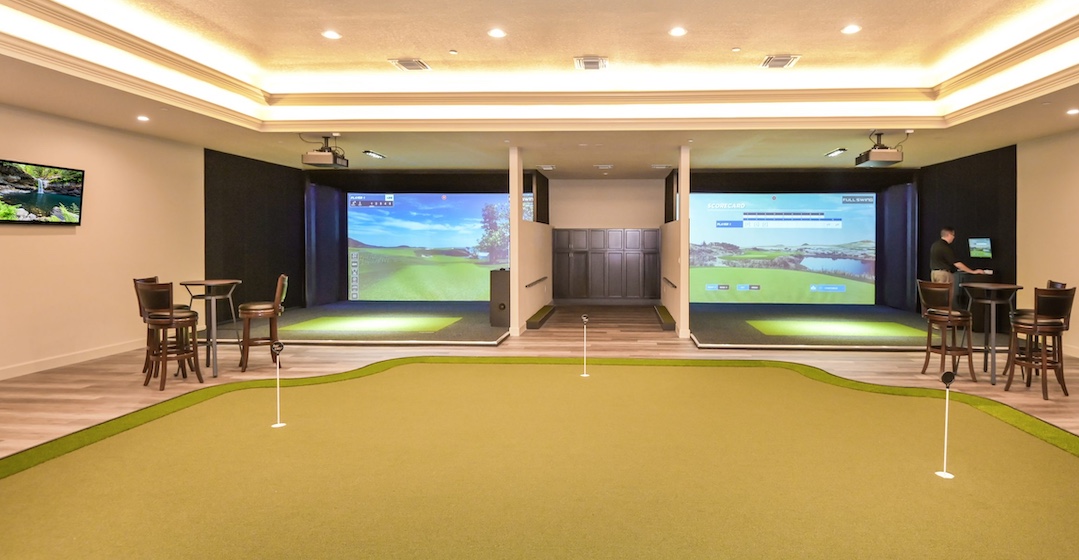
The Driving Range Is Moving Indoors ... And It’s Not Going Back
Indoor golf simulators are transforming practice, offering consistent data, accessibility and year-round training that is reshaping how golfers improve.

· 6 months ago
Related Articles
Business
+2
Courses
Technology

Golf's Next Country Club Might Be an App
Courses
+2
Equipment
Technology
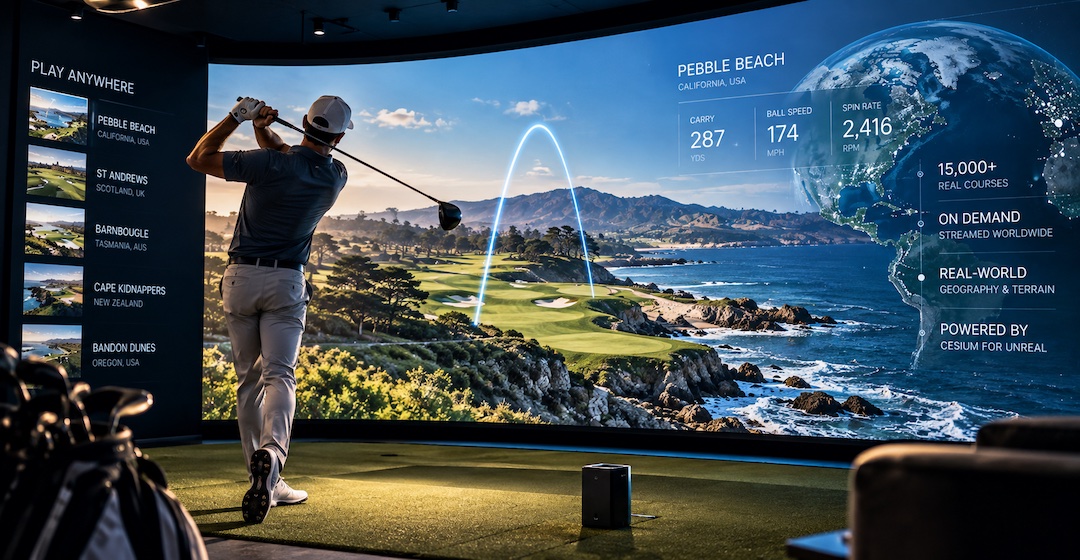
The Entire Planet Is Becoming a Golf Simulator

Tournaments

2026 Solheim Cup Set for Bernardus Golf in the Netherlands
Business
+2
Products
Technology
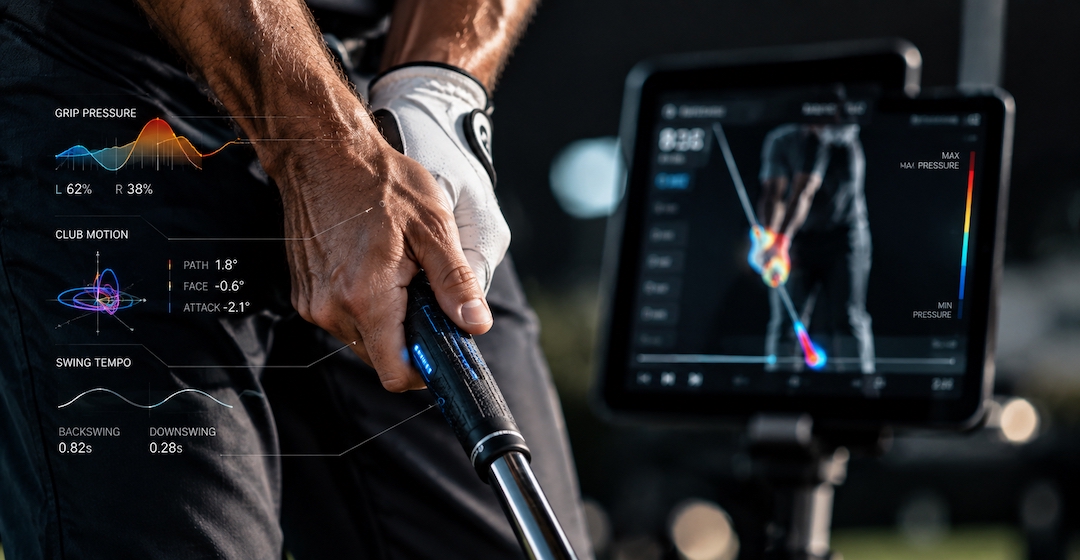
Golf's Most Important Sensor May Be Hiding in the Grip

Equipment
+1
Products
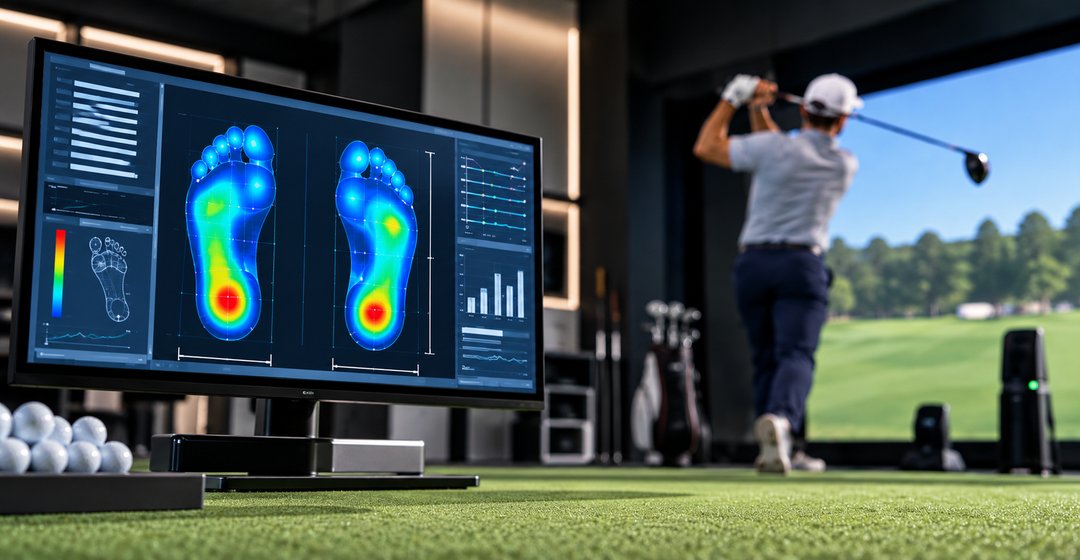
FootJoy Lab Testing Links Proper Shoe Fit to Measurable Speed Gains
Business
+1
Technology
Golf Tech Is Starting to Measure the Shot Before You Swing

Clubs
+2
Equipment
Technology

What Auditing 3,000 Golf Shaft Specs Taught Us About Weight
Business
+1
Technology

Golf Is Finally Getting Multiplayer Mode, Five Swings at a Time
Equipment
+2
Products
Technology

Golf's Next Computer Is 1.68 Inches Wide
Business
+2
Courses
Technology
The Golf Course Mechanic Is Becoming a Robotics Engineer

Business

LIV Golf Cancels Season Finale, Concerts Amid Operational Breakdown
Business
+1
Technology

Golf's Next Employee Might Just Be an AI Agent

Courses
+2
Tournaments
Podcast

Duff Foreman Could Make History as First Known AI Broadcast Personality to Join a Live Professional Golf Broadcast
Clubs
+2
Equipment
Technology

Golf's "Weirdest" Putters Are Winning the Engineering War

Business
+3
Products
Technology
Tournaments

ParTab Partners with iGolf to Bring Course Intelligence to the Games Golfers Actually Play
Business
+1
Technology

Golf AI Is Learning What Your Scorecard Can’t Tell You

Business
+1
Tournaments

iGolf Partners with Skins Golf to Power Its All-in-One Competitive Golf Platform
Business
+1
Tournaments

LIV Golf Cuts Prize Money Following Cancellation of Team Championship
Courses
+1
Tournaments

Carden Park Secures Women's PGA Cup Hosting Rights

Business
+2
Courses
Tournaments

LIV Golf's Season Finale Plans Scaled Back Amid Uncertainty