

Golfers have become accustomed to wearing technology on the course.
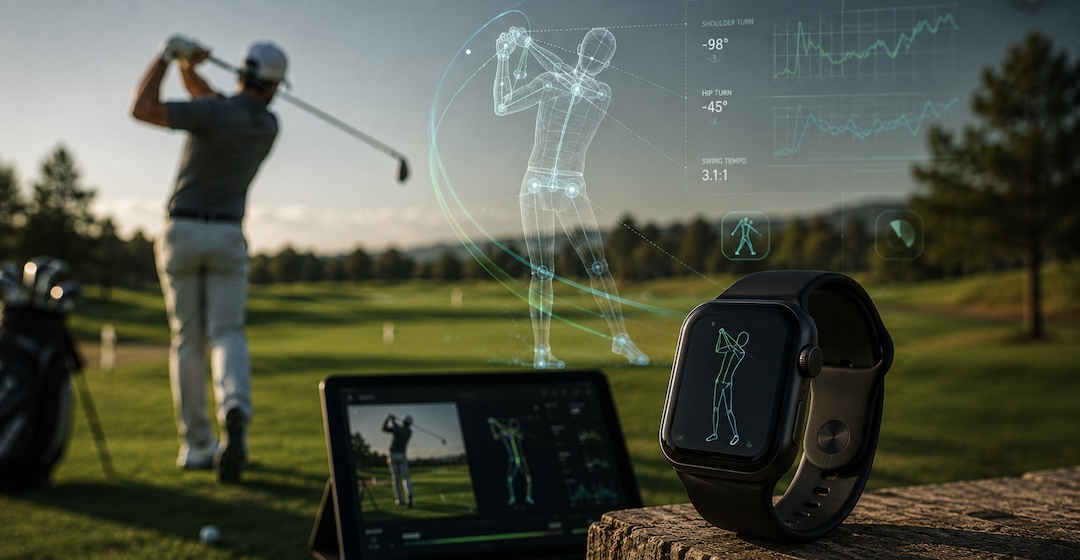
A smartwatch can tell you the distance to the green, track your heart rate, record a round and, depending on the software, help determine how far you actually hit each club. But researchers are now exploring something considerably more ambitious: using the tiny motion sensor already sitting on a golfer's wrist to reconstruct what the rest of the body is doing during the swing.
Not just the hands; the entire body.
A recently published research project introduces a deep-learning system capable of estimating full-body golf-swing movement using data from a single wrist-worn inertial measurement unit, or IMU—the same general class of motion-sensing technology found in modern smartwatches.
The implications extend well beyond another golf app. If the technology continues developing, sophisticated biomechanical analysis that traditionally required cameras, reflective markers and a laboratory could eventually become something golfers carry around on their wrists.
Golf's motion-capture studio is getting very, very small.
A Biomechanics Lab on Your Wrist
Analyzing a golf swing isn't particularly difficult if you're willing to build a laboratory around the golfer.
Optical motion-capture systems can surround players with cameras while markers attached across the body precisely measure how different joints move. Other approaches rely on multiple body-mounted sensors or carefully positioned video cameras.
These systems can produce extraordinary information; they're also impractical on the seventh tee.
Researchers from institutions including Shanghai Jiao Tong University and the National University of Singapore tackled that problem from the opposite direction. Instead of adding sensors until the entire body could be measured, they asked whether artificial intelligence could infer the body's movement from just one.
Their system, called WIT-KinNet, takes motion information captured at the wrist and uses deep learning to estimate full-body joint angles throughout the golf swing.
To test it, researchers studied 36 golfers ranging from beginners to skilled players. Participants hit full, half and quarter swings using seven different clubs, from driver down to sand wedge. Their smartwatch-derived motion data was then compared with laboratory-grade optical motion capture.
Across full-body joint angles, the system produced a mean absolute error of about 8.1 degrees. More impressively, it showed extremely strong correlations when tracking some of golf's most important rotational movements: 0.98 for pelvic rotation and 0.97 for upper-torso rotation.
Those numbers aren't evidence that your smartwatch is ready to replace a biomechanics expert tomorrow.
They demonstrate something arguably more interesting as AI can infer movement it never directly measured.
The Sensor Doesn't See Your Hips. AI Does.
That's the part of this technology that feels particularly 2026.
The watch isn't actually measuring the golfer's pelvis, torso, knees and shoulders. It can't see them. It sits on one wrist collecting acceleration, angular velocity and orientation data.
The intelligence comes from the model learning the relationships between that wrist movement and everything happening upstream throughout the body.
Think of it as reconstructing the movie from one actor's movements.
Golf happens to be unusually well suited to this type of inference because the swing is an interconnected kinetic sequence. Feet, knees, hips, torso, shoulders, arms and wrists don't operate independently. Movement in one area contains clues about movement elsewhere.
Machine learning can search for those relationships at a scale that would be enormously difficult to encode manually.
That potentially changes the economics of sophisticated swing analysis.
Instead of purchasing an array of cameras or attaching sensors throughout the body, the golfer could theoretically wear a device they already own and allow software to reconstruct much of what isn't being directly measured.
The expensive part becomes intelligence rather than hardware.
And that's a transformation happening far beyond golf.
Phones can computationally create photographs their tiny lenses couldn't produce conventionally. Wearables infer sleep from indirect physiological signals. Cars use collections of relatively inexpensive sensors combined with increasingly sophisticated software to understand their surroundings.
Golf may be heading down the same path: measure less, infer more.
What Happens When Swing Analysis Leaves the Lab?
The most interesting possibilities emerge when this technology moves outside controlled environments.
A conventional motion-capture session tells an instructor how a golfer swings inside a laboratory, while a watch could eventually help reveal how that golfer moves during an actual round—and that's a meaningful difference.
Golf swings change under pressure. Bodies fatigue. Tempo changes late in rounds. Players move differently with driver than wedge, and the researchers themselves found that skill level, club type and swing amplitude significantly affected measurement error.
Imagine software recognizing that hip rotation decreases on the back nine. Or identifying that a golfer's sequencing changes with longer clubs. Instead of analyzing five carefully rehearsed swings during a lesson, coaches could potentially study hundreds of swings collected during real golf.
The dataset becomes the round itself.
There are obvious limitations. This is early-stage research, not a finished consumer product, and an average joint-angle error measured in degrees matters when analyzing movements as precise as a golf swing. The system also needs broader validation across different golfers and real-world conditions before anyone should confuse it with laboratory motion capture.
But the direction is fascinating.
Golf technology has spent the past two decades surrounding players with more equipment: radar units, high-speed cameras, force plates and increasingly elaborate simulator installations.
AI could push the industry in the opposite direction.
Fewer sensors. Less setup. More inference. And perhaps eventually, no conscious interaction at all.
The most sophisticated piece of golf technology on the course may not be something you set behind the ball or point toward the flag.
It may already be strapped to your wrist, quietly collecting enough information for artificial intelligence to understand a swing it can't even see.
Your Smartwatch Is Learning to See Your Entire Golf Swing
AI can reconstruct a golfer's full-body swing from one smartwatch sensor, potentially shrinking sophisticated motion capture down to the wrist.

· 3 months ago
Related Articles
Business
+2
Courses
Technology

Golf's Next Country Club Might Be an App
Courses
+2
Equipment
Technology
The Entire Planet Is Becoming a Golf Simulator

Tournaments

2026 Solheim Cup Set for Bernardus Golf in the Netherlands
Business
+2
Products
Technology
Golf's Most Important Sensor May Be Hiding in the Grip

Equipment
+1
Products
FootJoy Lab Testing Links Proper Shoe Fit to Measurable Speed Gains
Business
+1
Technology
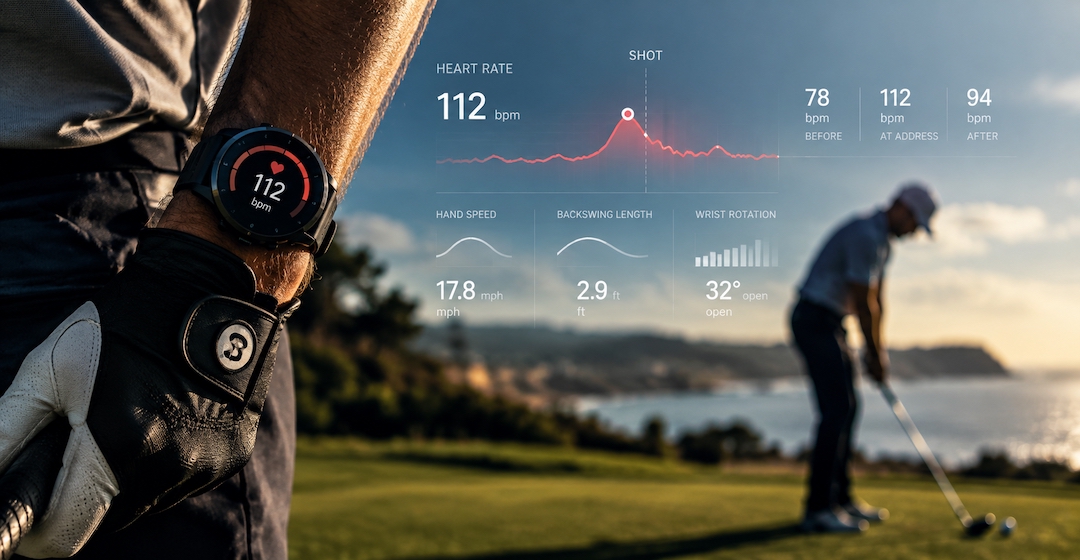
Golf Tech Is Starting to Measure the Shot Before You Swing

Clubs
+2
Equipment
Technology

What Auditing 3,000 Golf Shaft Specs Taught Us About Weight
Business
+1
Technology
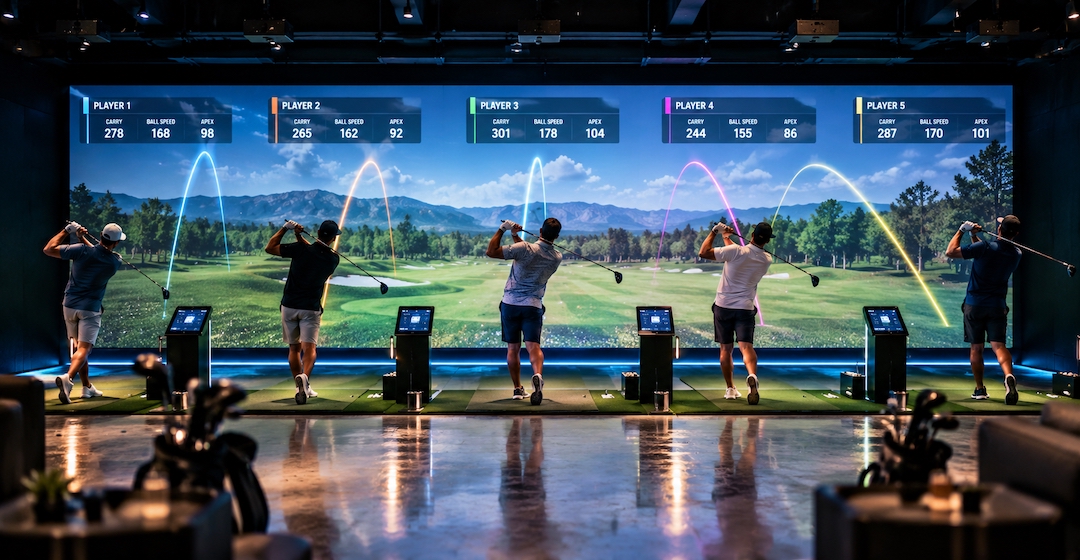
Golf Is Finally Getting Multiplayer Mode, Five Swings at a Time
Equipment
+2
Products
Technology
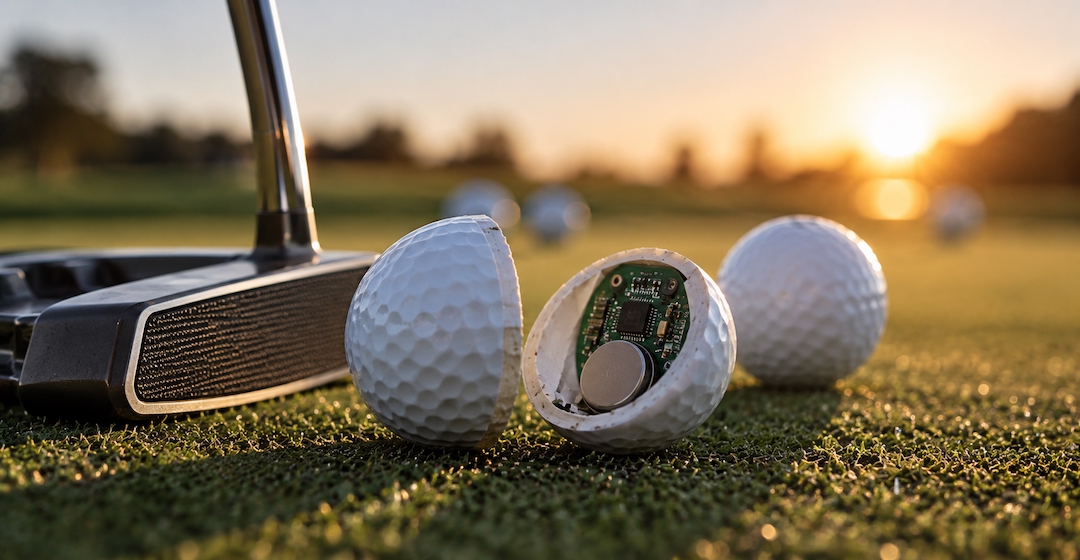
Golf's Next Computer Is 1.68 Inches Wide
Business
+2
Courses
Technology
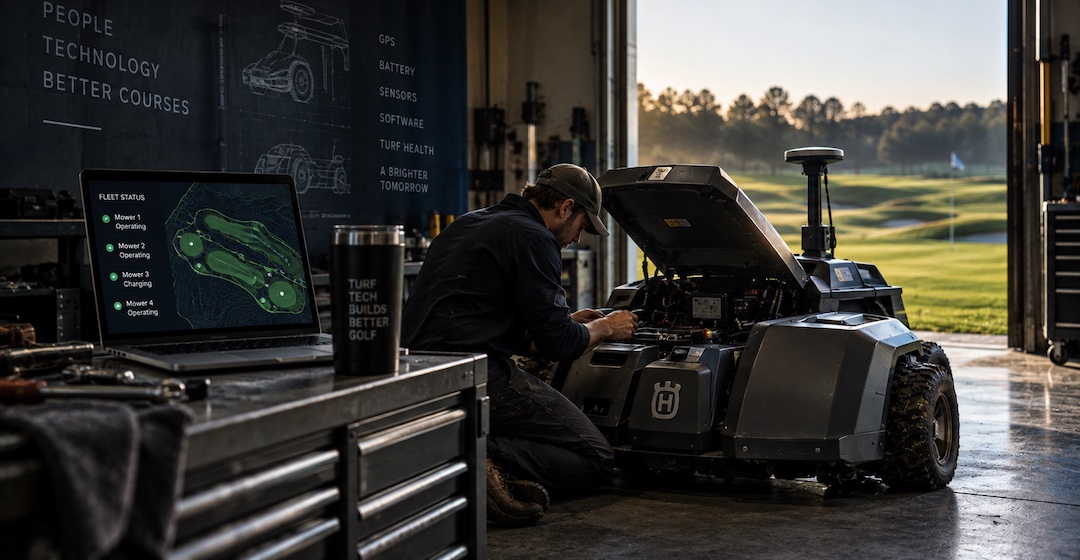
The Golf Course Mechanic Is Becoming a Robotics Engineer

Business

LIV Golf Cancels Season Finale, Concerts Amid Operational Breakdown
Business
+1
Technology

Golf's Next Employee Might Just Be an AI Agent

Courses
+2
Tournaments
Podcast

Duff Foreman Could Make History as First Known AI Broadcast Personality to Join a Live Professional Golf Broadcast
Clubs
+2
Equipment
Technology

Golf's "Weirdest" Putters Are Winning the Engineering War

Business
+3
Products
Technology
Tournaments

ParTab Partners with iGolf to Bring Course Intelligence to the Games Golfers Actually Play
Business
+1
Technology

Golf AI Is Learning What Your Scorecard Can’t Tell You

Business
+1
Tournaments

iGolf Partners with Skins Golf to Power Its All-in-One Competitive Golf Platform
Business
+1
Tournaments

LIV Golf Cuts Prize Money Following Cancellation of Team Championship
Courses
+1
Tournaments

Carden Park Secures Women's PGA Cup Hosting Rights

Business
+2
Courses
Tournaments

LIV Golf's Season Finale Plans Scaled Back Amid Uncertainty