

Every golfer leaves something behind. Sometimes it's a broken tee. Sometimes it's a ball in the woods. And sometimes it's a chunk of perfectly good fairway that goes flying farther than the golf ball.
For generations, repairing that damage has been somebody's responsibility. Golfers replace divots when they remember. Maintenance crews handle the rest, or at least did—because now there's a robot that can do it for them.
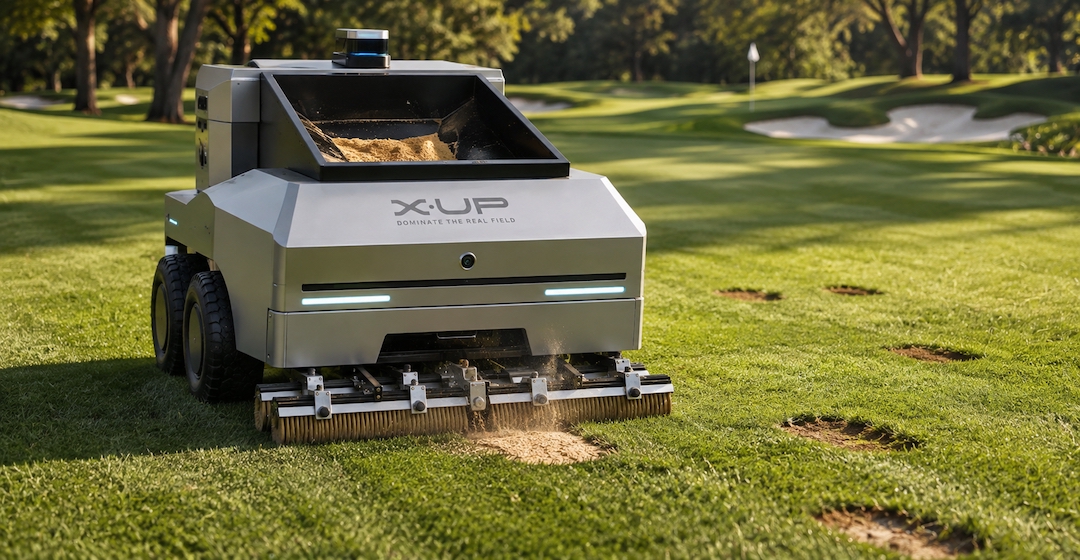
At Jack Nicklaus Golf Club Korea, a machine called DivotFiX recently demonstrated something that sounds suspiciously like science fiction: It drove around a golf course, identified damaged turf, determined which divots needed attention and repaired them without a person operating the equipment.
During a recent demonstration, the robot detected 21 divots, selected 11 for repair and completed the work. It also identified obstacles and adjusted its route to avoid them.
The demonstration was small, but the implications are considerably bigger as golf course robots are no longer just learning how to cut the grass; they're learning how to take care of it.
The Robot Can See What You Did
Developed by South Korea's HL D&I Halla with robotics partner X-Up, DivotFiX combines artificial intelligence, autonomous navigation and a mechanical repair system into a single machine.
Its job sounds simple until you consider what actually happens.
First, the robot has to navigate a golf course, an environment considerably less predictable than a factory floor. There are hills, bunkers, cart paths, irrigation features, maintenance vehicles and golfers who don't always walk where they're supposed to.
Then it has to recognize turf damage—and that requires distinguishing actual divots from shadows, discolored grass, bare patches and other irregularities that might look similar to a camera.
DivotFiX uses vision-based sensors and LiDAR, a technology that measures distances using laser light, to understand its surroundings. AI-based image recognition helps identify damaged areas and determine where repairs are needed.
Once a divot is selected, the robot positions itself, dispenses repair material and tamps the surface level; a very important distinction from conventional golf course automation.
A robotic mower follows a route and performs a repetitive operation. DivotFiX must recognize a specific problem before deciding where to act.
It's the difference between automation that follows instructions and a machine that responds to what it sees.
Golf Is Becoming a Physical AI Laboratory
Artificial intelligence has already found its way into golf instruction, launch monitors, club fitting and course management software.
Most of those applications work with information. They analyze numbers, recognize patterns and recommend decisions, but physical AI takes the next step as it connects those decisions to machines capable of acting in the real world and that introduces an entirely different level of complexity.
A software system can incorrectly classify a golf swing and produce a questionable recommendation. An autonomous machine must also worry about where it's moving, what it might hit and whether its actions are safe.
For DivotFiX, that means coordinating sensors, navigation, obstacle avoidance and mechanical repair while operating on living turf.
The company says the robot is designed to work during the day or at night, return for battery charging and material refilling, and provide managers with information about its progress and supply consumption.
There's also a potential connection to a much larger technological ecosystem as HL D&I Halla has been developing drone surveying and geospatial mapping capabilities that could eventually complement the robot's ground-level intelligence.
Imagine aerial surveys identifying problem areas across a course, autonomous machines traveling to those locations and a management platform recording what was repaired.
The course becomes a mapped, monitored environment where maintenance is increasingly driven by data—not just a place where robots work, but a place where machines understand what work needs doing.
The Most Expensive Part of Golf Isn't Always the Golf
Maintaining a golf course requires an extraordinary amount of labor. Fairways need mowing. Greens require precise attention. Bunkers must be maintained, irrigation systems monitored and damaged turf repaired—and much of that work happens before golfers arrive or after they leave.
Autonomous equipment offers an opportunity to shift some repetitive, physically demanding jobs away from maintenance crews, potentially freeing experienced workers for tasks that require more judgment.
Divot repair is particularly interesting because it is both tedious and unpredictable. Why? Because a superintendent cannot know exactly where tomorrow's golfers will take their divots; the damage appears throughout the day, scattered across acres of playing surfaces.
A machine that can locate and repair those spots could eventually help crews address damage more consistently.
There are safety considerations, too. Turf maintenance exposes workers to heat, equipment hazards and the occasional incoming golf ball, but a successful demonstration isn't the same thing as a commercially proven solution.
The robot still needs to demonstrate that it can handle different turf varieties, weather conditions, slopes and course layouts. Its repair quality, speed, operating costs and long-term reliability will matter as much as its ability to recognize a divot.
Those are questions the developers are still working to answer.
The Self-Repairing Golf Course
DivotFiX was recognized at CES 2026 in robotics and advanced mobility categories—and its recent demonstration represents another step toward testing the technology in actual golf course conditions.
The more interesting possibility is what comes afterward.
If autonomous equipment can identify and repair divots, similar approaches might eventually help detect irrigation problems, damaged turf, drainage issues or other maintenance concerns.
That doesn't mean golf courses are about to operate without superintendents; it means the superintendent's toolbox could become considerably smarter.
Golf's first wave of course automation taught machines to follow paths and complete repetitive jobs and now the next wave is teaching them to observe, interpret and respond, which changes the relationship between technology and the golf course itself.
For years, golfers have been told to repair their divots and leave the course better than they found it.
Now a robot might be following them around to make sure they do.
Golf's Next Groundskeeper Might Be a Robot That Fixes Your Divots
Golf course robots are learning to spot damaged turf, navigate fairways and repair divots. The next wave of physical AI could transform course maintenance.

· 1 day ago
Related Articles
Courses
+2
Equipment
Technology
Golf's Next Groundskeeper Might Be a Robot That Fixes Your Divots

Business
+2
Products
Technology

Skins Golf Launches on the App Store and Google Play With Alfred, an AI Director of Golf for Every Group

Podcast
Stop Slicing Your Driver: The 5-Minute Range Fix for Dead-Straight Drives
Courses
+2
Equipment
Technology

The Entire Planet Is Becoming a Golf Simulator
Business
+2
Courses
Technology

Golf's Next Country Club Might Be an App

Tournaments

2026 Solheim Cup Set for Bernardus Golf in the Netherlands
Business
+2
Products
Technology
Golf's Most Important Sensor May Be Hiding in the Grip
Equipment
+1
Products
FootJoy Lab Testing Links Proper Shoe Fit to Measurable Speed Gains
Business
+1
Technology
Golf Tech Is Starting to Measure the Shot Before You Swing

Clubs
+2
Equipment
Technology
What Auditing 3,000 Golf Shaft Specs Taught Us About Weight
Business
+1
Technology

Golf Is Finally Getting Multiplayer Mode, Five Swings at a Time
Equipment
+2
Products
Technology
Golf's Next Computer Is 1.68 Inches Wide
Business
+2
Courses
Technology
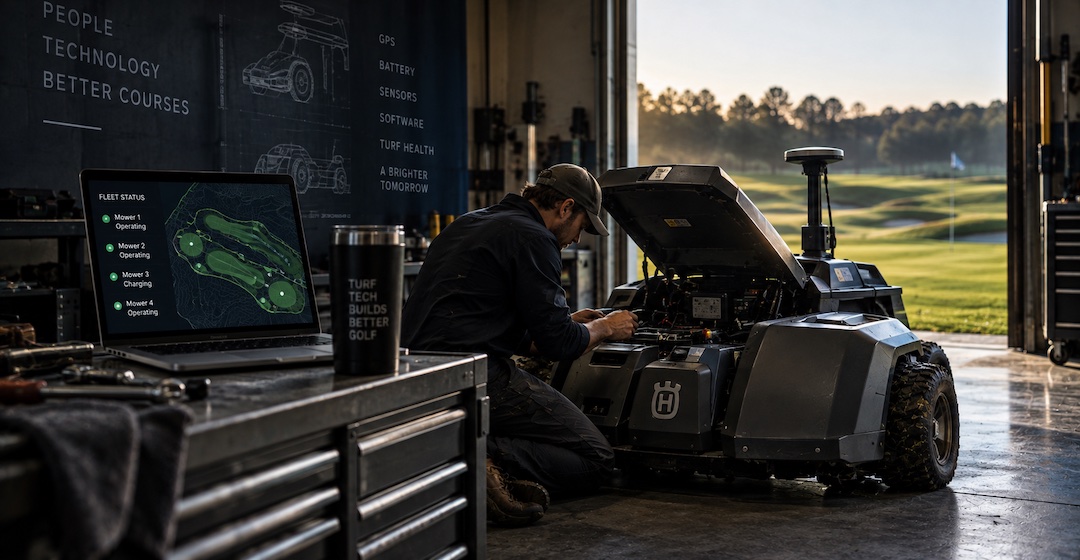
The Golf Course Mechanic Is Becoming a Robotics Engineer

Business

LIV Golf Cancels Season Finale, Concerts Amid Operational Breakdown
Business
+1
Technology

Golf's Next Employee Might Just Be an AI Agent

Courses
+2
Tournaments
Podcast

Duff Foreman Could Make History as First Known AI Broadcast Personality to Join a Live Professional Golf Broadcast
Clubs
+2
Equipment
Technology

Golf's "Weirdest" Putters Are Winning the Engineering War

Business
+3
Products
Technology
Tournaments

ParTab Partners with iGolf to Bring Course Intelligence to the Games Golfers Actually Play
Business
+1
Technology

Golf AI Is Learning What Your Scorecard Can’t Tell You

Business
+1
Tournaments

iGolf Partners with Skins Golf to Power Its All-in-One Competitive Golf Platform